
 Thailand

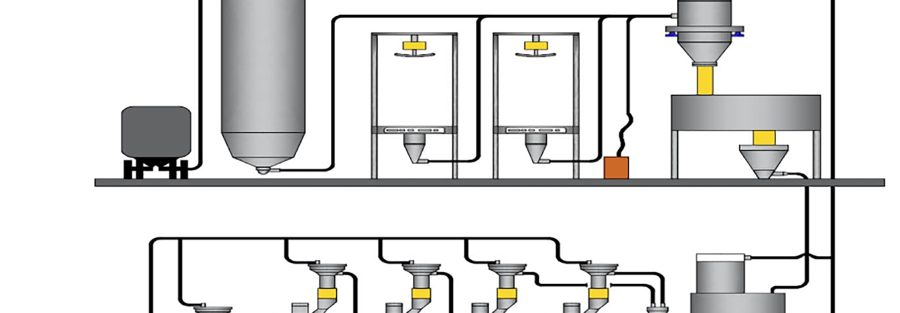
Key Design Parameters & Considerations for Pneumatic conveying
When designing a pneumatic‑conveying system, the following parameters must be carefully evaluated.
1. Material properties
- Bulk density: The mass per unit volume of the bulk material — heavier or denser materials require more air power and influence sizing of blowers/vacuum receivers.
- Particle size and shape: Fine powders, granules, pellets — each behaves differently in airflow. Size and shape affect how easily material lifts off, stays suspended, or tends to settle.
- Flowability / moisture / stickiness / abrasiveness: Moist or sticky powders may clog; abrasive materials cause wear on pipes and fittings.
- Fragility / friability: Some powders or granules may break or degrade under high velocity; in such cases, design must avoid excessive speed to preserve product integrity.
2. Conveying distance & pipeline layout
- Total conveying distance (horizontal + vertical + equivalent length for bends): Longer pipelines require stronger air supply (pressure/flow) to overcome pressure drop and friction.
- Number of bends, elbows, vertical lifts, sweeps: Each elbow / sweep / change in direction adds resistance, increasing required pressure/airflow and risk of wear or blockages.
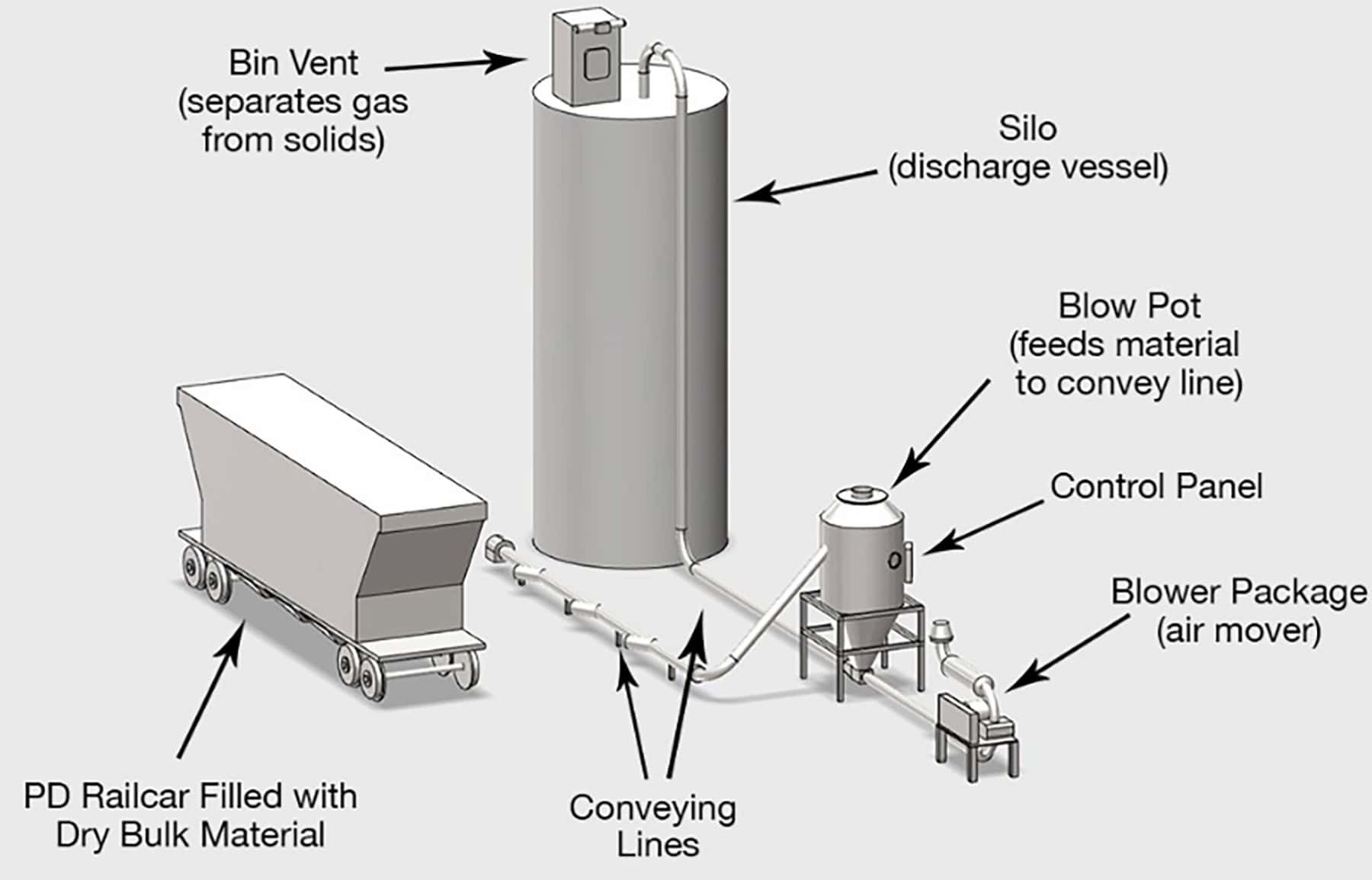
- Layout constraints & headroom: The physical layout of your plant, the pick-up points (e.g. silo discharge, bag dump, feeder) and discharge points determine the complexity of the pipeline routing.
3. Air parameters: velocity, pressure, air-to-solid ratio
- Air or conveying gas velocity: To keep particles suspended (avoid settling), there is a minimum “saltation” or suspension velocity. For example, dilute‑phase systems often require high velocity for fine powders or granules.
- Conveying pressure / pressure drop across the pipeline: You need sufficient pressure (or suction) to drive air + solids through the piping network, especially over long distances or with many bends.
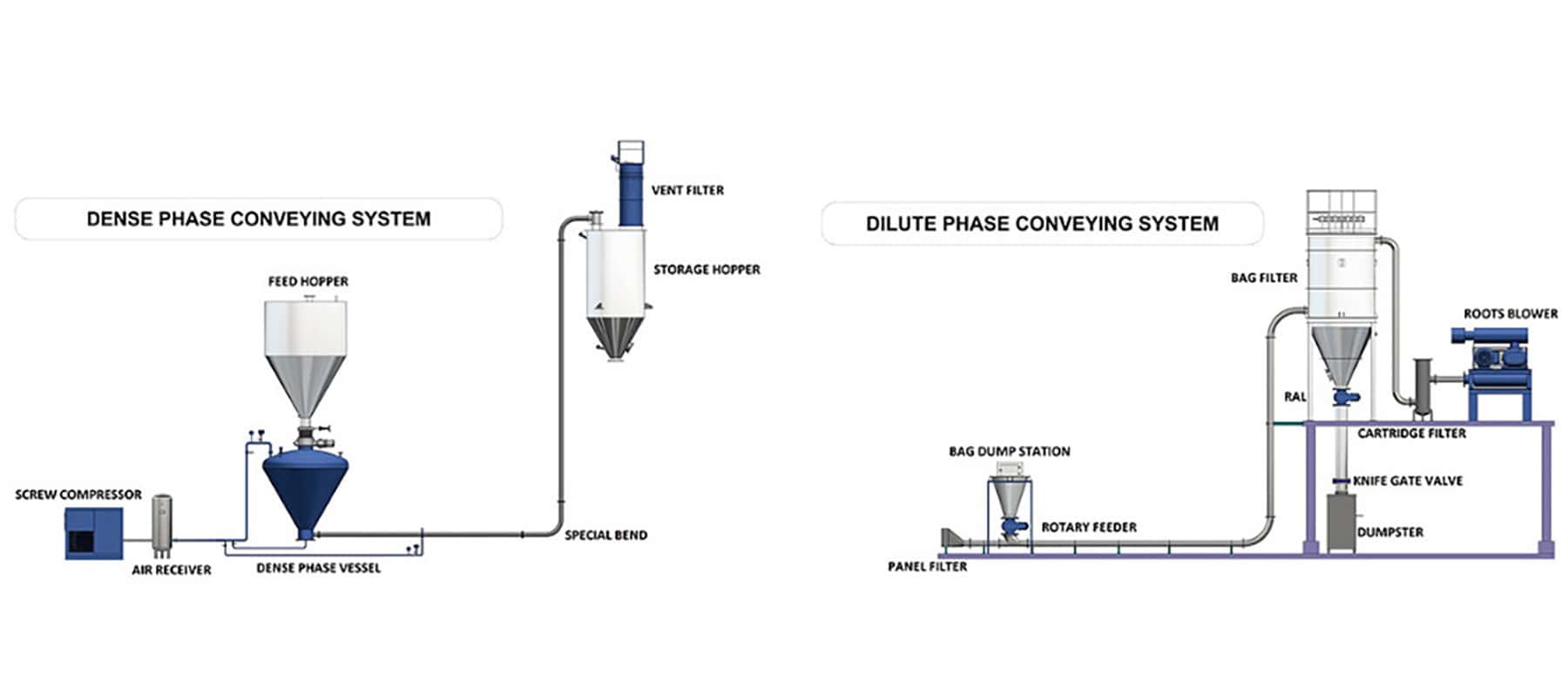
- Solid‑to‑gas (solids loading) ratio: The mass ratio of solids to conveying air — affects flow regime (dense vs. dilute), energy requirement, and wear rate.
4. Conveying rate & process mode
- Required throughput / mass flow rate (e.g. kg/h): Defines how much material must be moved per time unit — affects blower/compressor size, pipe diameter, air volume, etc.
- Batch vs continuous conveying: In batch operation, material may be transferred in short bursts — requiring short-term high capacity (airflow, pressure). Continuous conveying needs steady, balanced design.
5. Pipeline diameter and construction / wear & maintenance
- Pipe diameter: Must be optimized — too small and particles may block or pressure drop high; too large and air velocity drops, causing settling.
- Material of construction & wear resistance: For abrasive or hard powders, choose wear‑resistant materials (e.g. hardened steel, special alloys) to prolong pipeline life.
- Accessibility and layout for maintenance: The design should allow for inspections, cleaning, filter changes — especially important for food, chemical, or hygroscopic powders.
6. Feeding & discharge mechanism / interfaces
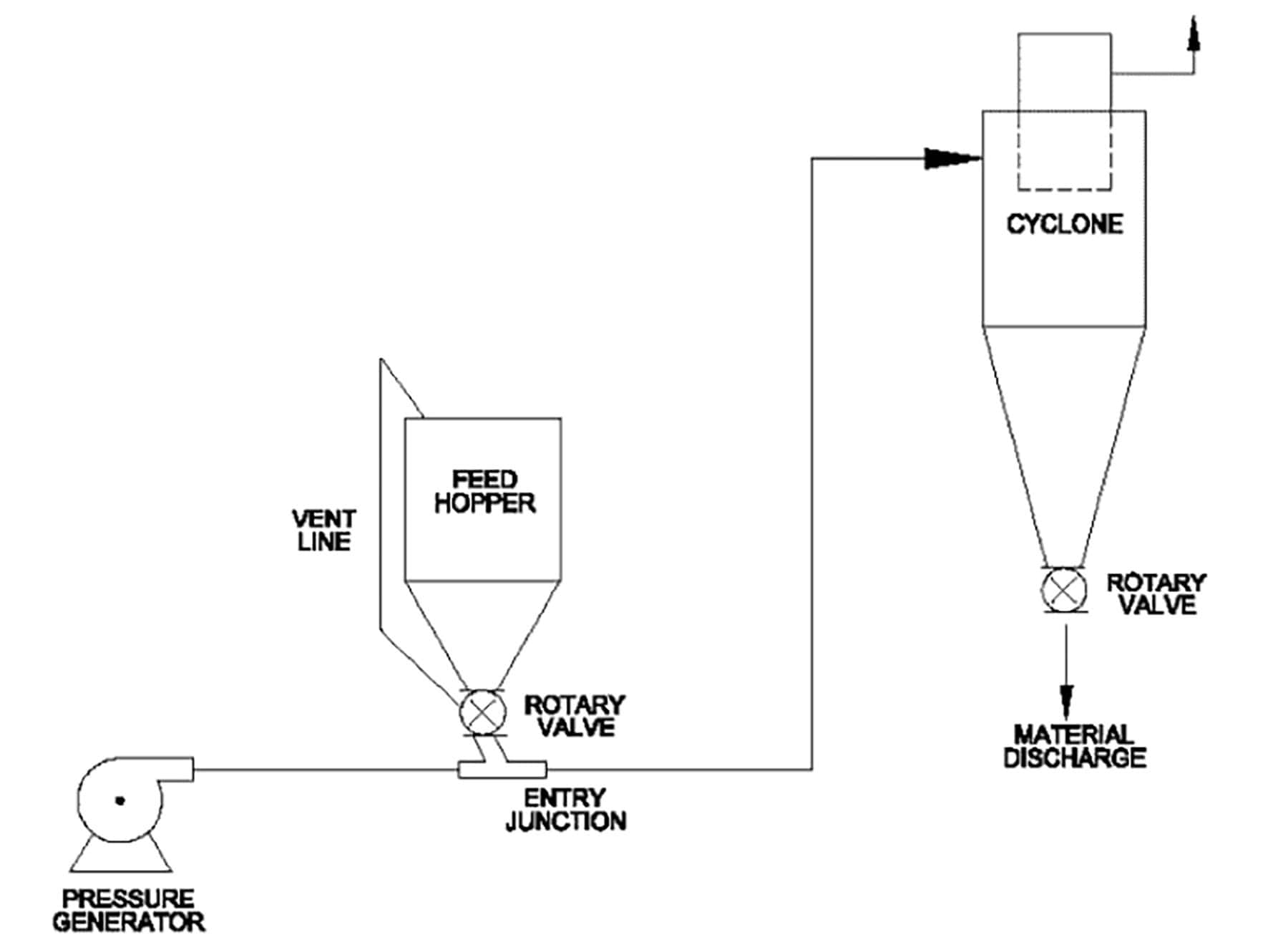
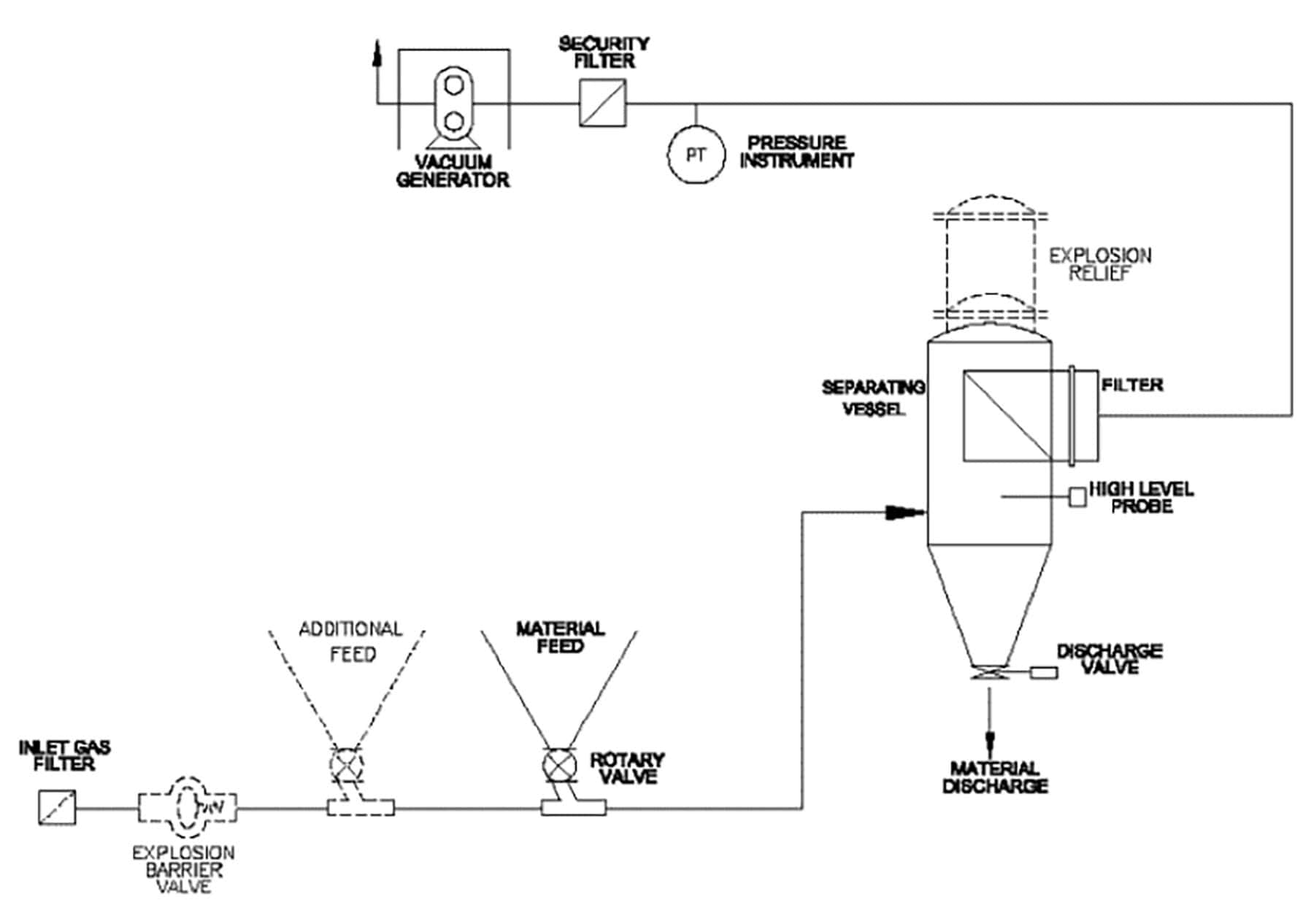
- Feed inlet & discharge system design: For example, feeding from a silo may require an airlock, valve or special feeder; bag dump stations or bulk‑bag dischargers have their own interface requirements.
- Dust control, filtration, safety: For dusty or fine powders, dust filters / cyclones / baghouses are often needed. Also for hygienic or regulatory compliance (food, pharma).

Flow‑chart / How these parameters interplay
1. Determine the material properties (density, particle size, moisture, abrasiveness, friability) → this sets baseline for air velocity, dust control, pipe material.
2. Determine conveying requirement (rate, batch vs continuous, pickup & discharge points).
3. Determine pipeline layout (distance, bends, vertical lifts, layout constraints).
4. Based on above: choose airflow parameters (air volume, velocity, pressure) + pipe diameter / geometry + feeder/discharge components.
5. Assess wear, maintenance, safety & dust control needs; choose materials and add filtration or cleaning systems if required.